Latest update April 1st, 2015 6:34 PM


Korean filmmakers in China: Kim Jinsung
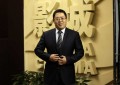
Graduated from Yonsei University, Kim Jinsung started his career as a director while he was an officer in Korean Film Council. His short film Where Have You Been was nominated for Best Live Action over 15 Minutes at Palm Springs International ShortFest 2000, and then he directed The Showdown and The 11th Mom.
———————————————————————————————————————————————-
I have worked with filmmakers from different countries, and their way to produce films varies. With regard to the system of filmmaking and censorship, China’s circumstances are exceptional. If filmmakers from other countries have the intention of making films in China, they should get to know the special circumstances in advance as it plays a vital role in making co-productions. Otherwise, they will have to face many difficulties.
When I first came to China, I did not come because of any planned projects.In South Korea, I had learnt that the Chinese film market willprobably surpass the film market in the United States in ten years: I thus came here to tap the market. Currently, the market in South Korea has already reached its saturation level, and filmmakers have comparatively few opportunities. However, a huge film market is rising in China, which indicates considerable opportunities. Also, the different film genres in China are not very diversified, which means that there are still manythemes to explore here. As a Korean director, I witnessed the South Korean film marketexperience the same evolutionseveral years ago,and I can use my past experience while working in China.
What kind of filmsshould Korean producers make in China? This is a major issue for Korean filmmakers who attempt to explore the market here. When the concept of “Sino-Korean co-production”was first introduced, many Korean filmmakers, including me, just hopedthat Chinese and Korean people could collaborate in making films.Now we find out that Sino-Korean co-productions seldom perform well at the box office in China, and there seemsto be no successful cases. Some people carried out analysis, and they attributed the failure to the difference of taste in films between Chinese and Korean audiences. Considering this fact, I prefer to make Chinese films, which cater to the Chinese audiences’ taste, when I come to China. I will probably invest Korean technical strength inpre-production, production and post-production.
I have been working on a movie which may be totally regarded as a Chinese film that might have the chance to be screened in Chinese theaters.Because I also hope that the film can enter both film festivals and the Chinese film market. Also, all the roles will be played by Chinese actors. We have found some well-known actors that are willing to play a part with a relatively small payment thanks to the quality of the script. As adirector, I hope to directly communicate with actors in Chinese, so I am now studying Chinese hard, to resume my Chinese study 20 years ago when I was in college. At present, this project remains at the stage of screenwriting, and some local governments have already shown their interests in investing in the project. We have found a Chinese production company which will be responsible for a part of the investment.On the topic of looking for a Chinese partner, the capability of recruiting actors and distribution seem more important than its financial capacity.
After cooperating with Chinese filmmakers, I think the most distinct difference of filmmaking between China and South Korea lies in screenwriting. If we regard making a film as a 100% process, 95% of the whole process will be concentrated on screenwriting and adaptation in Korea. There is a clear disparity in the efforts that have been devoted in screenwriting between China and Korea. In Korea, we normally do some work even before actual screenwriting regarding it as a formal process in which money has been invested, such as looking for a screenwriter, selecting topics and then writing a screenplay and revising it. In China, it seems that it is not necessary to do anything before there is a screenplay; people seem to start making the film once they have a nice screenplay.
Before I came to China, I did not know much about the Chinese market and the films that Chinese audiences may like. That is why I faced many obstacles in the beginning, but now I have been making some efforts to know the market and the Chinese audience better. I have watched box office hits and done research. I have also started to learn Chinese culture and Chinese history, trying to understand what kind of stories that Chinese people will be interested in. The history that Chinese people have gone through is also worth learning.
Besides the lack of understanding of Chinese culture, advertising and distribution are the main problems for a foreign director in China. We do not have the network that local directors have, and it is difficult for us to form partnerships and establish a local network in China.
If Korean filmmakers want to make films in China, they must have an in-depth understanding about the Chinese film market and overcome the language barrier. For those Korean filmmakers who come to China without any knowledge of the environment in the country, KOFIC is the organization helping them to settle down.Other countries probably do not have such a government institution that provides assistance for their filmmakers who work in overseas countries. However, I assume that fundraising and looking for investors are not the obligations of KOFIC. In China, Korean filmmakers should be independent instead of totally depending on KOFIC to explore the market.

Related articles




More in this category










People
-
 Zhou Quan Talks About The Golden Horse Film Academy Photo credit: GHFA Director Zhou Quan writes about his...
 -
 Sesame, open! by Xu Jia “Our proposition is simple: we want to help...
 -
 AFI Graduate New Talent Zhou Quan Photo credit: Each Other Films Born in a renowned ancient...
 -
 Amber’s Adventures in Wonderland Sensitive and translucent, Amber KUO Tsai Chieh started her...
 -
 Dennis Liu the Genius By Xu Jia I ran into director Dennis Liu’s work thanks to...
Don’t Miss
-
 Now Official: The Lionsgate and Hunan TV & Broadcast... CHANGSHA, March 18, 2025 - Lionsgate (NYSE: LGF), a...
 -
 BAFTA Announces Scholarships To Aid Chinese and British... Support to study film, television or games, in the UK and...
 -
 Fang Li: Producing Quality Films As A Pleasure Fang Li built Laurel Industrial Company Inc., an earth...
 -
 Bridging the Dragon – Starting in Berlin BERLIN Feb 10, 2026 – Launched by producers for...
 -
Zhou Quan Talks About The Golden Horse Film Academy Photo credit: GHFA Director Zhou Quan writes about his...