Latest update December 15th, 2015 10:12 PM


Ride the Wave with TIFFCOM
An exclusive interview with Mika Morishita
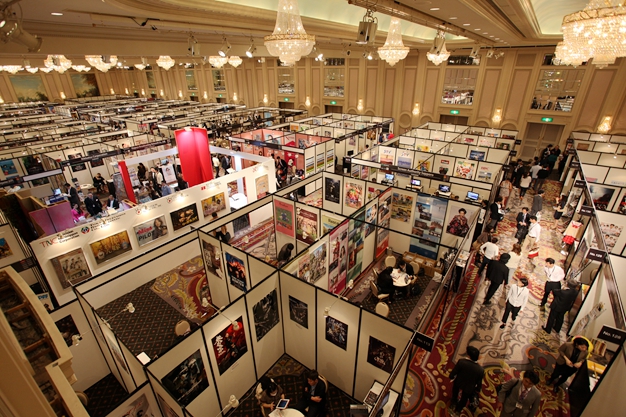
Mika Morishita is Director of TIFFCOM, one of Asia’s largest pan-entertainment content markets, a vital showcase for film, TV, animation and music. This year, TIFFCOM takes place from October 21 to October 23 at Grand Pacific Le Daiba in Odaiba, Tokyo. Besides seminars and industry gatherings, there is a number of live performances by artists from all over the world. In this exclusive interview, Morishita-san shares her vision with THE CHINESE FILM MARKET about TIFFCOM and possible collaboration between the Japanese and Chinese companies and filmmakers.
CFM: What is the major difference between TIFFCOM 2014 and its previous editions?
Mika Morishita: Backed by the Government Subsidy for Localization & Promotion of Japanese Visual Media (J-LOP), the number of first-time exhibitors from outside Tokyo has significantly increased. As a new attempt, we designed “Property Zones” for the purpose of introducing renowned Japanese media contents. MOBILE SUIT GUNDAM will be the first project to be presented at Property Zone. Alongside Property Zone, we’re also featuring an iconic figure that represents “Cool Japan” this year — KYARY PAMYU PAMYU.
CFM: The music market is an important part of TIFFCOM - what was the original purpose to include it in TIFFCOM?
MM: Initially, the Tokyo International Music Market (TIMM) took place in a different venue. Since last year, under the government’s advice, by merging the moving image and music businesses, we are encouraging the creation of new business models and projects.
By providing more opportunities to showcase live performances at the market, we expect to create more chemistry and synergy between the moving image and music businesses.
“For three days this fall, Japan Content Showcase 2014 will offer everything you need to know about the content market. The events will include twelve seminars on a variety of themes, from films, music and broadcasting, to corporate mascots and animation, and ‘Showcase Live’ by speakers and artists from around the world.”
CFM: It seems not so many film co-productions are made in Japan. What would be the possible reasons in your opinion?
MM: It is widely recognized that there was not a high demand for international co-productions as the Japanese film industry was able to monetize itself sufficiently through domestic demand.
Also, I think subsidization systems for international co-productions are not fully established yet, compared to Canada or Europe.
CFM: How would you define TIFFCOM in your own words?
MM: Asia’s largest networking platform for key people in the film, TV, music and animation industries.
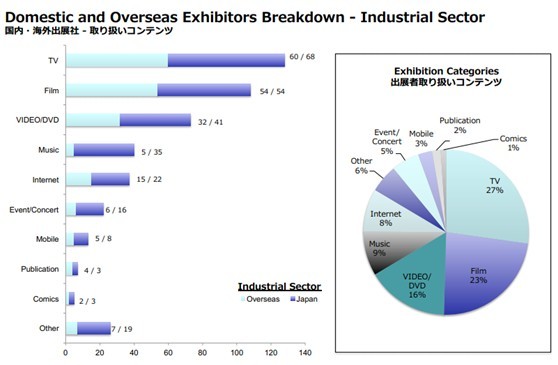
Source: TIFFCOM Market Report 2013
CFM: What are the most exciting event/forum in this year’s TIFFCOM?
MM: There is a business seminar moderated by Masi Oka, the renowned actor and producer based in Hollywood; a session on location incentives with speakers from a diverse range of film commissions around the globe, including local cities from Japan, Seoul, Estonia and Canada; a presentation on prominent literary materials that have the potential for international screen adaptation; an overview of essential tips and methods for the international co-production of TV documentaries; a discussion on the scope of international sales and marketing for music; and a seminar presented by Asian buyers that compares and contrasts their respective business environments.
CFM: What TIFFCOM would be like in 5 years from now?
MM: I want to double the scale, to advance TIFFCOM from a hub for networking to a hub for dealmaking and to foster TIFFCOM to become the essential platform for Asian creators to produce and create brand-new works.
CFM: Does TIFFCOM plan to build more connections with Chinese filmmakers, producers or talents, for example, a TIFFCOM Academy in production training?
MM: We wish to collaborate with Chinese partners further in film production and business.
For instance, we would like to increase participants from China and design a mutually beneficial relationship. Perhaps Japanese businesses can collaborate in Chinese films, with their enormous market potential, through product placement.
As well as establishing business ties, we would like to offer more opportunities for business matching and presentations for Chinese companies.
For example, it would be feasible to provide an opportunity for Chinese film production companies to pitch their projects, and provide product placement opportunities for Japanese companies.
CFM: Is it possible that TIFFCOM help build some activities in China, since there are millions of Japanese anime and cartoon fans in China?
MM: Some companies have attempted to co-produce animation projects with Chinese companies, but those attempts did not pay off fully.
We would definitely like to create a framework to leverage Japanese technology for animation in the Chinese market.
We also would like to promote other Japanese media content like as Doraemon, Pokemon and Yokai-watch!

Related articles



More in this category