Latest update January 1st, 2016 3:17 PM


VR is Going to Change China’s Film Industry
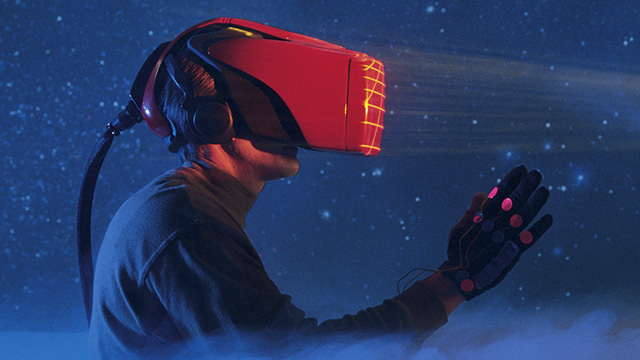
Visual Reality or VR has been spoken for years, but it didn’t attract serious attention until Facebook bought Oculus for $2 billion in 2014. The company’s truly immersive VR headset for video games proved to the world that VR could be commercially viable. The industry has been exploding ever since, both in terms of investment and development, and China is no exception.
Although currently, most of the leading VR hardware and software are created by overseas tech giants, like Oculus Rift, Sony Morpheus, Samsung GearVR, and HTC Vive, there still remains tons of room to grow in China as none of the products have gone into the so-called mass production.
A handful of startups in China have been working on almost every VR-related area under the sun. Baofeng Mojing, ANTVR and Three Glasses are a few among the dozens of VR headgears created by Chinese teams. Recently LeTV, a major online video site, announced its own VR smartphone adapter would be released soon.
Starting with Oculus, the focus of VR application was mainly on video game, which was also the first group to drive adoption. It makes sense, as video game is an ideal medium for a technology that enables users to go around and interact with the environment like in a real world.
But soon, other industries have been stepping up. Video VR or cinematic VR has also entered the spotlight.
“Immersion and interaction are the two key requirements of VR. It is the same with the video VR, but it involves much more effort to make it work,” said Wang Tao, Chief Technology developer of iQIYI.
“With gaming VR, you have full control of your world. You can move where you want. You can move your head and we have head tracking. But in cinematic VR, we are limited by the current toolset because unless you move your camera, you are fixed in a static shot,” said Grand Anderson, Head of Studio of Jaunt VR which specializes in cinematic VR that films reality in 360 degree and 3D.
“There’s no single technology as virtual reality. So many technologies have to come together. We need higher resolution screens. We need better body track that can track people’s hands, arms, and legs,” he said.
“In traditional filmmaking, you start with a static shot and then you move closer. But with virtual reality, you start with the environment around you and wonder where you are and who you are,” Wang added.
Wang also noted that iQIYI has been trying to use VR to stream live events like pop star concerts, which received great popularity as it let the viewers to watch their idols from whatever angle they want.
Feng Xin, CEO of Baofeng Technology, said that there is no doubt virtual reality is moving forward fast and will scale very quickly. “It is a great opportunity not only for video industry but also for the whole Internet industry,” he said.

Related articles




More in this category